

What happens when the rigorous, meticulous world of academic research collides with the high-pressure, fast-paced reality of the industrial sector? For many, these two environments speak entirely different languages. While academia chases scientific perfection and publication, industry demands scalable solutions, rapid decision-making, and a clear return on investment (ROI).
Jonas Ignatavičius unpacks the friction and the immense potential that exists between the laboratory and the boardroom. Drawing from his firsthand experience during his LETSGROW mobility, Jonas shares insights on why both worlds are often suspicious of each other, how to move past surface-level networking to achieve real knowledge transfer, and why the future of innovation belongs to researchers who can navigate both worlds.
Radek Hojka: We talk about bridging the gap between academia and industry. Honestly, who is more afraid of whom? Is the researcher afraid of the real world, or is the CEO afraid of the lab talk?
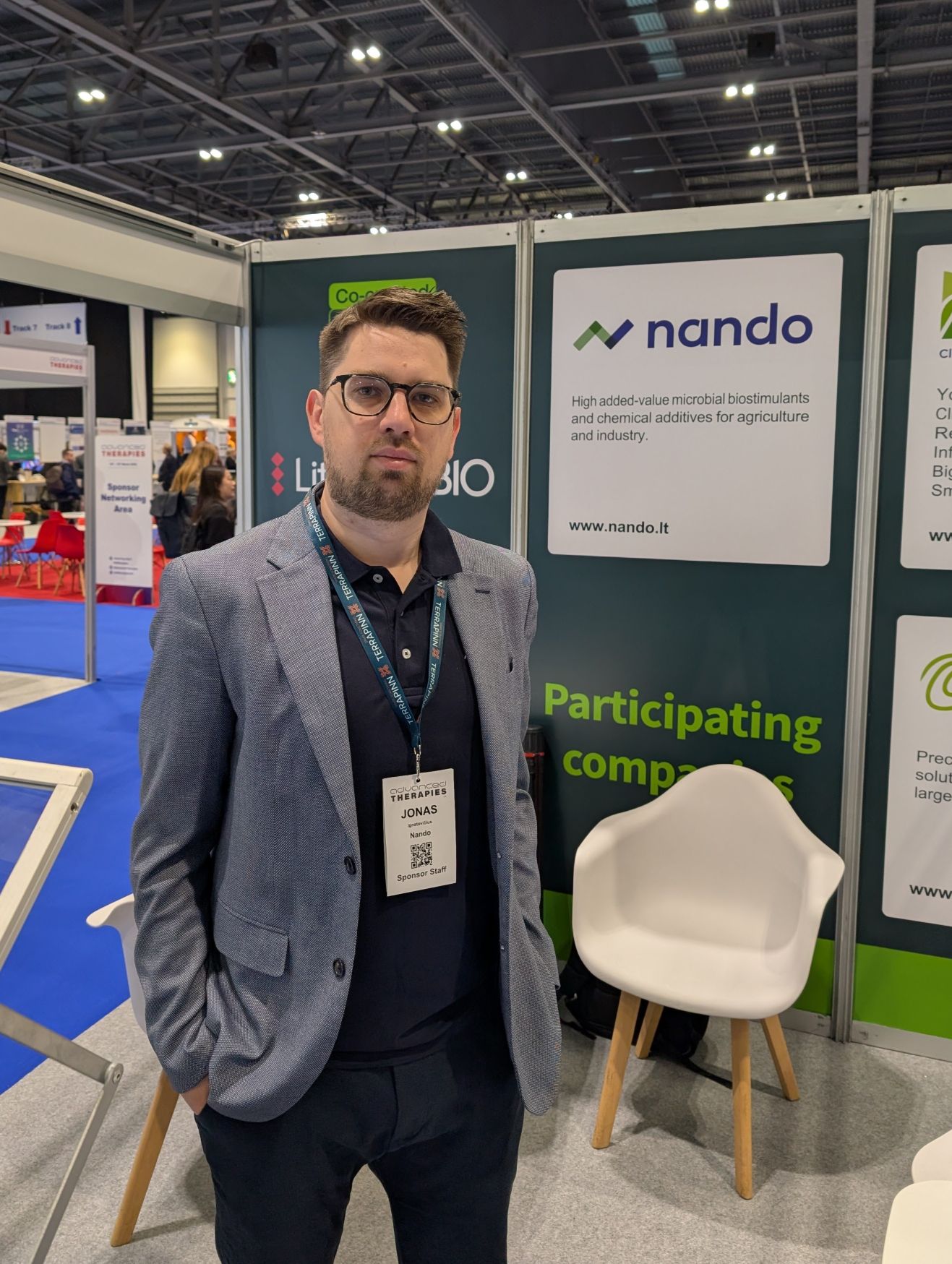
Jonas Ignatavičius: Honestly, both are equally suspicious of each other, just for different reasons.
Researchers often think industry only cares about quick profits and doesn’t understand scientific complexity. Industry people often think researchers live in a world of endless discussions, unrealistic timelines, and publications nobody will ever use.
During my mobility, I was told multiple times that my working speed was too fast and that academia simply does not operate like that. I did not fully agree with this mindset. In innovation projects, especially when working with industry, decisions cannot always wait for perfect certainty. I kept pushing discussions toward concrete actions, timelines, and actual next steps.
After spending time in both environments, I realised the main issue is not competence, it is differences in language, priorities, incentives, and speed. Projects like LETSGROW help people understand how both worlds operate in reality.
Radek Hojka: How does the project ensure that the knowledge gained in a private company actually flows back into the academic institution?
Jonas Ignatavičius: That only happens if the mobility is practical, not symbolic.
If somebody just visits a company, attends a few presentations, and takes photos for LinkedIn, then nothing really transfers back. But when people work on real proposals, real operational problems, real commercialisation questions, and real implementation challenges, then the knowledge becomes usable.
One thing I noticed very clearly during the mobility is that academia often lacks understanding of how real products and value creation actually work. For example, waste stream valorisation sounds attractive scientifically, but if there is no realistic path toward positive ROI and industrial scalability, the chances of implementation are extremely low.
This does not mean such research has no value, but industry can help research focus on areas where scientific innovation actually has a realistic chance to survive commercially. In my opinion, that interaction is extremely important and often underestimated.
In my case, the mobility was directly connected to Horizon Europe proposal development, industrial collaboration, and technology implementation discussions. Those experiences immediately influence how future research projects should be designed.
Radek Hojka: What is the biggest challenge talents face when moving from a laboratory environment to a high-pressure industrial setting?
Jonas Ignatavičius: Speed and decision-making.
In academia, you can spend months optimising something from 92% to 95%. In industry, sometimes you need to make a decision tomorrow with incomplete information because production, deadlines, or customers cannot wait.
Another major challenge is understanding commercial reality. A solution that works beautifully in a laboratory may still fail completely if it cannot scale economically or generate value in a real business environment.
This was especially visible in discussions around side-stream valorisation and biological product development. Many ideas are scientifically interesting, but some have no realistic pathway toward industrial profitability. Business pressure can actually be healthy in this context because it forces prioritisation toward solutions that can realistically survive outside the laboratory.
That transition is uncomfortable at first, but it is also where a lot of real innovation maturity develops.
Radek Hojka: Why should a young researcher choose the LETSGROW path instead of a traditional academic career track?
Jonas Ignatavičius: Because the world does not really need more isolated expertise. It needs people who can connect science, funding, industry, implementation, and communication.
Traditional academic careers are still valuable, but they often train people for a system that is becoming narrower and more competitive. Programs like LETSGROW expose researchers to how innovation actually works outside papers and conferences.
You gain technical knowledge, but also learn how projects are built, how partnerships happen, how funding decisions are made, and how ideas survive in the real world.
For me personally, one of the biggest takeaways was understanding how differently academia and industry evaluate the same idea. Scientific novelty alone is not enough. Timing, scalability, market need, operational feasibility, and economic logic matter just as much. Learning to combine those perspectives is probably one of the most valuable skills a researcher can develop today.